No Labels Movement: Unity & Diversity on March 1st

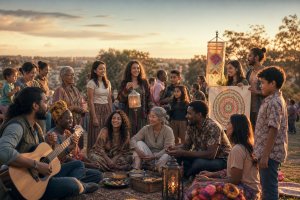
No Labels, No Limits: Celebrating Diversity on 1 March
A Comprehensive Guide to America’s Emerging Day of Unity
Introduction
Hook
As America approaches its 250th anniversary in 2026, a growing cultural momentum is emerging around 1 March—a date increasingly associated with diversity, unity, and renewed commitment to open dialogue. In a season filled with semiquincentennial programming, communities and organizations are looking for meaningful ways to reaffirm what binds the country together rather than what tears it apart.
Overview
“No Labels, No Limits: Celebrating Diversity on 1 March” reflects this shift. While not a formal national observance, the movement mirrors the values of free expression, inclusion, and bipartisan cooperation championed by organizations such as No Labels and echoed in the cultural landscape shaped by 2026 unity initiatives. It embraces the idea that diversity—of identity, of viewpoint, of experience—is not a barrier, but a strength.
Thesis
1 March offers a timely platform to champion diversity, elevate open dialogue, and strengthen collective identity at a moment when polarization, mistrust, and shrinking speech tolerance threaten America’s social fabric.
Background and Context
Historical Development
No Labels emerged in the early 2010s as a centrist, bipartisan organization designed to counter political gridlock by cultivating trust and cooperation across party lines (citation: No Labels Congress archives). Over the past decade, its programming has increasingly emphasized dialogue, mutual understanding, and “problem-solving first” politics.
Simultaneously, as 2026 approached, diversity-centered initiatives expanded nationwide. Museums, national parks, and cultural institutions began designing semiquincentennial programming that highlighted inclusive American histories and broadened the narrative beyond traditional milestones (citation: Washington, DC 2026 press materials).
Current Relevance
These trends are unfolding against stark contemporary challenges. According to the 2026 FIRE College Free Speech Rankings, student tolerance for controversial speakers has declined significantly, while support for shouting down speakers reached record highs across 257 campuses (citation: FIRE 2026 report).
At the same time, the 2026 semiquincentennial planning committees have embraced inclusive storytelling as a core theme, from DC’s nationwide messaging to major cultural festivals.
All of these forces converge to make 1 March an ideal moment for a cultural reset—a day to consciously reject labels, expand dialogue, and celebrate diversity.
Main Body
What “No Labels, No Limits” Means
The phrase captures three interconnected ideas:
Unrestricted expression
Creating space for people to express differing viewpoints without fear mirrors FIRE’s advocacy for open discourse and campus neutrality principles.
Diversity as strength
The movement embraces identity in all its forms—demographic, ideological, cultural, and experiential—believing that richer perspectives lead to better solutions.
Unity without uniformity
The goal is not sameness but collaboration. Participants maintain their individual identities while engaging constructively across differences.
Latest Statistics
Recent data underscores the urgency of this mindset:
- FIRE reports steep declines in student willingness to host controversial speakers and record increases in support for shouting down speakers (2026 FIRE Rankings).
- No Labels’ February 2026 “Just the Facts” newsletter highlights the U.S. debt approaching historic highs, reinforcing the need for bipartisan cooperation on national challenges.
These statistics make one point clear: America needs more open, diverse dialogue—not less.
Expert Opinions
- FIRE researchers describe “striking shifts” in free speech culture, emphasizing uneven tolerance by ideology.
- No Labels leaders warn: “No Talking, No Fixing,” arguing that political silence blocks progress (Feb. 6, 2026 newsletter).
- DC Mayor Muriel Bowser called the city “America’s front door,” underscoring its role in inclusive semiquincentennial storytelling.
Case Study: The National Scrollathon Exhibition
From May to September 2026, the Kennedy Center hosts the National Scrollathon, featuring contributions from more than 250,000 participants. Individuals submit words expressing hopes for America, woven into massive collaborative artworks. This living tapestry illustrates “no labels” in action—countless voices merging into one narrative of unity.
Current Trends and Future Outlook
Institutions nationwide are adopting the Chicago Principles and institutional neutrality, with Vanderbilt rising from #140 to #7 in FIRE’s rankings after implementing robust free speech reforms.
Meanwhile, diversity-centered events—such as the 2026 Cherry Blossom Festival—are influencing national attitudes toward inclusion.
Looking ahead, 1 March could evolve into an annual checkpoint for unity programming as America embraces new traditions.
Impact Analysis
Societal impact
Fueled by cross-ideology conversation models, the movement encourages cooperation in a polarized era.
Educational impact
Universities face growing pressure to reduce self-censorship and protect open discourse.
Cultural/economic impact
Inclusive semiquincentennial programming boosts tourism, supports local arts, and fosters cultural participation.
Comparisons with Related Movements
- FIRE’s Free Speech Rankings focus primarily on speech protections, not broader diversity.
- Semiquincentennial events celebrate national history and cultural unity.
- No Labels’ bipartisan forums focus on political problem-solving.
“No Labels, No Limits” sits at the intersection, blending speech openness, inclusive storytelling, and civic unity.
Controversies and Debates
Critics argue centrism may water down strong policy goals. Others highlight rising protest disruptions that challenge speaker rights. There is also ongoing debate about ensuring historical accuracy while expanding inclusivity in national celebrations.
How-To: Celebrate “No Labels, No Limits” on 1 March
Step-by-Step
- Create a micro-dialogue circle: small, 20-minute structured conversations between people with differing viewpoints.
- Host a diversity story exchange: participants share a one-minute story that shaped their identity.
Best Practices
Use neutral framing to reduce defensiveness, and apply active listening rules like summarizing before responding.
Mistakes to Avoid
Don’t assume shared experiences; don’t limit diversity to demographics—include worldview and lived experience.
Alternatives
Virtual cultural showcases or anonymous community story walls are accessible options for small groups and local events.
Frequently Asked Questions
Why is 1 March becoming symbolic?
It’s positioned at the start of spring cultural programming and aligns naturally with unity-driven 2026 events.
How can small communities join in?
Dialogue circles, story-sharing walks, or simple art boards can foster participation without cost.
Does “no labels” ignore identity?
No. It rejects limiting stereotypes while embracing authentic identity.
How can workplaces participate?
Use anonymous idea submissions, role-swapping exercises, or cross-department culture shares.
Is political affiliation required?
Absolutely not. The movement emphasizes nonpartisanship and open expression.
Challenges and Solutions
- Polarization
Solution: Structured dialogue formats maintain fairness and psychological safety. - Diversity fatigue
Solution: Prioritize authenticity and community leadership over performative gestures. - Disruption risks
Solution: Clear dialogue norms and neutral facilitation.
Ethical Considerations
Avoid tokenism; protect participants’ psychological safety; maintain transparency about event goals.
Success Stories
- Vanderbilt University’s rise to #7 in FIRE rankings after embracing open discourse.
- Scrollathon participants reporting deeper connection to a shared national story.
- Testimonials from No Labels congressional forums praising restored political trust.
Tools and Resources
Facilitation kits with prompts and anonymity tools, livestream platforms modeled after the Power to the Middle conference, and community art collaboration tools inspired by the Scrollathon.
Conclusion
1 March stands at the crossroads of free expression, inclusion, and civic unity. As America approaches its 250th anniversary, “No Labels, No Limits” provides a meaningful framework for celebrating diversity—not as a buzzword, but as a shared national strength.
By embracing open dialogue, honoring identity, and cultivating unity without uniformity, communities can transform 1 March into a lasting tradition of connection and hope.
Additional Resources
Related posts