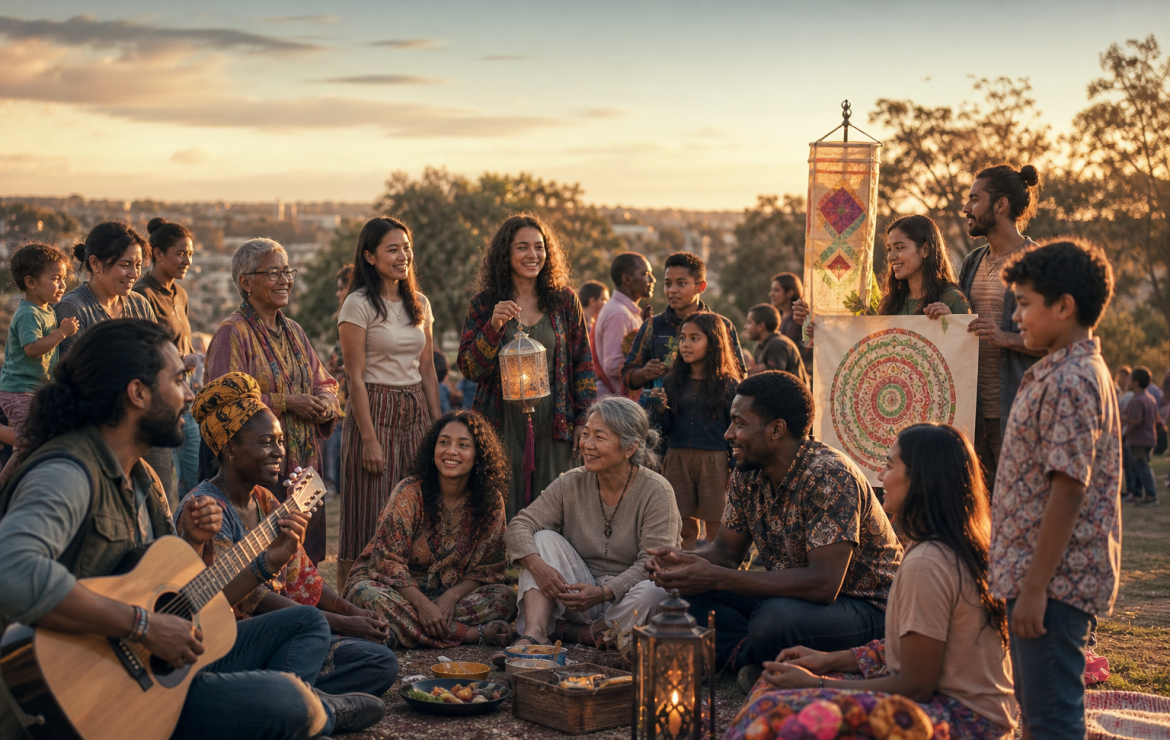
Courage in Crisis: Refugee Week 2026

“`html
15 June to 21 June – World Refugee Week: Courage, Community, and the Search for Durable Solutions
Global refugee numbers fell by 3% in 2025—the first decline in a decade, according to recent UNHCR-linked reporting. At first glance, that sounds like a rare piece of good news in a difficult global story. But a small decline does not mean the displacement crisis is over. Millions of people are still living far from home because of war, persecution, insecurity, and other overlapping pressures. Millions more are displaced inside their own countries or remain stateless, without the protection of nationality.
That is why Refugee Week, observed from 15 to 21 June, matters in 2026. Held annually in the UK and increasingly recognized internationally, the week includes World Refugee Day on 20 June, the United Nations’ global day of awareness and solidarity. The 2026 theme, “Courage,” invites communities to recognize not only the courage it takes to flee danger, but also the courage required to rebuild, welcome, listen, and create lasting solutions.
Refugee Week is more than a calendar event. At its best, it challenges stereotypes, celebrates refugee creativity and contribution, supports local solidarity, and focuses attention on durable solutions: safe return, resettlement, integration, education, employment, and lawful pathways that allow people to rebuild their lives with dignity.

Background: From Cultural Festival to Global Conversation
Refugee Week began in the UK in 1998 as an arts and cultural festival. Its original purpose was to celebrate the creativity, resilience, and contributions of refugees while creating opportunities for communities to meet, listen, and learn from one another. That cultural foundation remains important. Art, music, food, film, literature, and storytelling can open conversations that statistics alone cannot.
Over time, Refugee Week has expanded beyond arts programming. Today, it includes school projects, university events, library exhibitions, workplace discussions, public policy forums, fundraising campaigns, volunteering drives, and local government initiatives. The week remains rooted in culture, but it now also serves as a space for education, advocacy, civic recognition, and practical action.
Refugee Week is closely connected to World Refugee Day, observed every year on 20 June by the United Nations. The two observances are related but not identical. World Refugee Day provides a global focal point for awareness and international policy discussion. Refugee Week offers a broader, multi-day platform for local activity, community connection, and public participation. Together, they help connect global responsibility with local action.
It is also important to use terms carefully. A refugee is someone who has crossed an international border because of persecution, conflict, violence, or serious threats. An asylum seeker is someone seeking international protection whose claim has not yet been decided. An internally displaced person has been forced to flee but remains within their own country. A stateless person is not recognized as a national by any country. Refugee Week often addresses the experiences of all these groups, even though their legal situations differ.
The 2026 observance is especially significant because displacement remains historically high, the year marks the 75th anniversary of the 1951 Refugee Convention, and UNHCR reporting points toward a major policy shift: from emergency response alone toward durable, long-term solutions.
The Global Displacement Picture in 2026
The latest figures show why Refugee Week remains urgent. A decline in refugee numbers is meaningful, but it must be read alongside the wider scale of displacement and the continued movement of people fleeing crisis.
| Indicator | Latest Figure | Context |
|---|---|---|
| People forcibly displaced worldwide | 123.2 million | End-2024 UNHCR figure |
| Refugees globally | 41.6 million | June 2026 reporting for end-2025 |
| Change in refugee numbers | Down 3% | Recorded during 2025 |
| People who became new refugees in 2025 | 5.4 million | Crossed borders during the year |
| Refugees and internally displaced people who returned | 14.7 million | Recorded in 2025 |
| Stateless people | Approximately 4.5 million | June 2026 reporting |
| Projected resettlement needs | 2.5 million | 2026 estimate, down from 2.9 million |
Visual note: This table should be presented with a simple caption such as: Key displacement indicators use different definitions and reporting dates. Refugees, internally displaced people, stateless people, and all forcibly displaced people are not interchangeable categories.
The reported 3% fall in global refugee numbers matters because it was described as the first decline in a decade. It may indicate that some people were able to return home or that displacement patterns shifted. But it does not mean the global crisis has ended. In 2025, 5.4 million people still became new refugees, crossing borders in search of safety. Many others remained trapped in long-term displacement, often for years or decades.
Statistics help us understand scale, trends, funding needs, resettlement pressures, and changes in returns. But they cannot fully capture what displacement means in daily life: interrupted schooling, separated families, lost qualifications, language barriers, uncertainty over legal status, and the emotional toll of rebuilding in unfamiliar places.
Climate-related disasters are also adding pressure, especially in fragile contexts. Climate stress does not replace conflict or persecution as a cause of refugee movement under international law, but it can intensify humanitarian crises, undermine return and reintegration, and increase pressure on host communities already supporting large displaced populations.
From Emergency Response to Durable Solutions
Emergency protection saves lives. Food, shelter, medical care, safe reception, and legal protection are essential when people flee danger. But many refugee situations last far longer than the emergency phase. That is why UNHCR’s 2026 analysis emphasizes durable solutions—ways for people to rebuild stable, safe, and self-directed lives.
Traditionally, there are three durable solutions:
| Durable Solution | What It Means | When It Works Best |
|---|---|---|
| Voluntary Return | Returning home safely and by informed choice | When conditions are secure and reintegration support exists |
| Local Integration | Building a life in the host country | When people can access work, education, housing, services, and legal status |
| Resettlement | Moving to a third country offering protection | When people cannot safely return or remain in the first country of asylum |
Complementary pathways also matter. These include education routes, employment pathways, family reunification, and other lawful options that reduce reliance on dangerous journeys.
UNHCR’s “50 by 35” objective aims to reduce by more than half, by 2035, the number of refugees in prolonged displacement who remain dependent on humanitarian aid. This reflects a major shift: from short-term relief alone toward long-term opportunity, self-reliance, and inclusion in education, labor, housing, financial, and public service systems.
Barham Salih, UNHCR High Commissioner, has argued that the international system must help refugees rebuild their lives rather than leave them in long-term aid dependence. The broader message is clear: progress should not be measured only by whether people move across borders or return home. It should also be measured by safety, rights, livelihoods, education, family unity, and the ability to participate fully in community life.
Employment is central, but it is not enough on its own. A person may have the right to work but still face barriers such as missing documents, unrecognized qualifications, lack of childcare, limited transport, language barriers, or discrimination. Durable solutions require systems that work together.
Refugee Week in Practice: Local Action and Community Impact
During Refugee Week, communities host film screenings, exhibitions, storytelling events, music and food festivals, school assemblies, public discussions, library displays, university panels, fundraising campaigns, and volunteer drives. The strongest events combine celebration with practical pathways for action.
A useful 2026 example comes from Rockville, Maryland, which formally proclaimed 15–21 June 2026 as World Refugee Week. The proclamation recognized refugee dignity and resilience, encouraged people to come together, and framed welcome as a civic responsibility. This matters because local institutions are often where inclusion becomes real: schools enroll children, libraries provide information, health services offer care, councils coordinate housing and support, and employers open pathways to work.
Refugee Week can have impact across several sectors. Public institutions can use it to improve education and community cohesion. Nonprofits can recruit volunteers, raise funds, and increase visibility. Artists and cultural organizations can challenge one-dimensional portrayals of displacement. Employers can review hiring practices, mentoring opportunities, and qualification recognition. Most importantly, refugee-led organizations can shape the narrative and agenda, ensuring events are not simply about refugees but led with and by people with lived experience.
Meaningful impact should be measured beyond attendance numbers. A successful Refugee Week activity might create new partnerships, refer people to employment or legal services, involve refugees in leadership, influence institutional policy, or lead to a year-round volunteer program. The key question is not only “How many people came?” but “What changed after they left?”
Key Debates in Refugee Policy
Refugee Week takes place within difficult and sometimes polarized policy debates. One major issue is return versus protection. UNHCR emphasizes that returns should be voluntary, safe, informed, and sustainable. The 14.7 million refugees and internally displaced people who returned in 2025 may be a positive signal, but return numbers alone do not prove that conditions are safe everywhere. A return is durable only if people can rebuild securely.
Another debate concerns funding. Emergency humanitarian funding is essential during sudden crises, but protracted displacement requires multi-year investment in education, housing, livelihoods, healthcare, and local services. Short-term funding cycles can interrupt schooling, weaken planning, and leave both refugees and host communities without stable support.
Responsibility-sharing is also central. Displacement is often concentrated in a relatively small number of host countries and long-running crises. Host communities need financial and service support. Wealthier states face calls to expand resettlement and complementary pathways. Aid agencies must make difficult decisions with limited resources.
Public narratives add another layer. Refugee Week seeks to counter dehumanizing or misleading narratives through culture, direct contact, and lived experience. At the same time, public concerns about asylum processing, border control, housing, and public services should be addressed honestly. The challenge is to separate legitimate policy questions from misinformation and collective blame.
| Approach | Primary Emphasis | Main Strength | Main Limitation |
|---|---|---|---|
| Refugee Week | Culture, storytelling, and community welcome | Humanizes displacement and broadens public engagement | Time-limited and unevenly supported |
| World Refugee Day | Global awareness and UN advocacy | Strong international visibility | One-day focus may not sustain action |
| Year-round integration programs | Housing, work, language, and services | Addresses practical long-term needs | Requires stable funding and receives less public attention |
How to Plan a Meaningful Refugee Week Activity
A good Refugee Week event begins with purpose. Rather than trying to cover every issue, choose one clear objective: build understanding, celebrate refugee-led culture, recruit volunteers, raise funds for a specific service, connect people to education or employment pathways, or encourage institutional change.
Partnership should come before planning. Contact a refugee-led organization or trusted local support group early. Ask what the community actually needs. Pay or properly support speakers, artists, interpreters, and consultants. Agree on safeguarding, consent, accessibility, and decision-making responsibilities.
Choose a format that matches your purpose. A school might hold an age-appropriate assembly and literature project. A library might host a multilingual reading group. An employer might run a workplace session on refugee hiring and skills recognition. A council might link a public proclamation to service improvements. A community group might organize a meal, film screening, or moderated discussion.
Every event should include an action pathway. Attendees should leave knowing what they can do next: volunteer, donate to a vetted organization, mentor someone, support language learning, attend a council consultation, offer professional expertise, or join a follow-up activity after 21 June.
Safety and accessibility are essential. Plan for interpretation, disability access, childcare, family-friendly timing, safe transport, confidentiality, and clear rules on photography or recording. Avoid asking people to retell traumatic experiences publicly. Consent-based storytelling protects dignity and gives people control over how their experiences are shared.
Common mistakes include organizing a symbolic event with no practical outcome, using distressing images to attract attention, treating refugees as subjects rather than partners, promising legal or housing results that cannot be delivered, and using outdated or mixed statistics.
Challenges and Practical Solutions
One of the biggest challenges is protracted displacement. People may spend years or decades without secure access to work, education, housing, documentation, or financial systems. Solutions include expanding legal work access, recognizing qualifications, investing in schools and local services, and supporting UNHCR’s “50 by 35” goal.
Funding is another barrier. Short and unpredictable funding cycles make it hard to maintain services or plan for integration. Flexible, multi-year financing can help local governments, nonprofits, and host communities provide stable support.
Resettlement capacity remains limited. UNHCR projects that 2.5 million people will need resettlement in 2026, even after a decrease from 2.9 million. Governments can expand resettlement places while also building complementary pathways through education, employment, and family reunification.
Returns must also be handled carefully. Rising return numbers are encouraging only when returns are voluntary, informed, safe, and sustainable. Reintegration requires housing, documentation, education, livelihoods, and long-term monitoring.
Finally, negative public narratives can undermine inclusion. Accurate data, refugee-led voices, respectful community contact, and honest discussion of policy concerns can reduce misinformation and build trust.
Ethical Best Practices for Refugee Week
Ethical participation begins with dignity. Refugees should be represented as people with skills, relationships, ambitions, and agency—not only as victims or burdens. Language should reflect legal distinctions accurately and avoid generalizations.
Informed consent is essential for photographs, interviews, videos, and personal stories. Participants should know where material will appear and should be able to withdraw consent. Extra care is needed when children or people with uncertain legal status are involved.
Avoid “trauma tourism.” Events should not depend on asking people to recount painful experiences for public consumption. Difficult realities can be discussed without turning trauma into a spectacle. Balance stories of hardship with creativity, leadership, work, family life, education, and achievement.
Data should also be handled responsibly. Use reputable sources such as UNHCR, UN News, and the UN Refugee Data Finder. Clearly label reporting dates and avoid mixing figures that refer to different categories or time periods.
Best practice: The strongest Refugee Week events do not simply speak about refugees—they create space for refugees to lead.
Success Stories and Signs of Progress
The 14.7 million refugees and internally displaced people who returned in 2025 represent a significant development, described in reporting as the second-highest return rate since 1965. In some places, return may indicate improved conditions or renewed possibilities for rebuilding. But the qualification matters: returns should only be considered durable success when they are safe, voluntary, informed, and sustainable.
Personal testimonials can also be powerful, but they should never be invented or extracted. If included, they should come directly from a consenting refugee participant or refugee-led organization and focus on agency, education, employment, community welcome, or cultural contribution—not hardship alone.
Practical Resources for Readers and Organizers
For data and research, the UNHCR Refugee Data Finder is one of the most useful tools for current displacement indicators, country comparisons, and trend tracking. UNHCR’s Global Trends reporting provides annual figures and interpretation, while the Projected Global Resettlement Needs report helps explain resettlement planning and capacity requirements.
Practical event equipment may include a projector, sound system, accessible venue, interpretation support, captioning tools, translated materials, anonymous feedback forms, and secure systems for handling participant information. The most important “tools,” however, are trusted partnerships, accurate information, and a clear plan for follow-up.
Frequently Asked Questions
Is Refugee Week only for people who work in the refugee sector?
No. Refugee Week is for communities, schools, cultural organizations, businesses, public institutions, faith groups, local governments, and individuals. People can participate by attending events, learning, volunteering, donating, supporting refugee-led initiatives, or improving inclusion in their own institution.
Can an organization participate without holding a large public event?
Yes. A small, well-supported activity can be more meaningful than a large event with little follow-through. Options include a staff learning session, book or film discussion, policy review, donation drive, volunteering campaign, or internal conversation about hiring, access, and inclusion.
How can I support refugees without sharing personal information about them?
Focus on rights, contributions, and practical support rather than personal details. Use consent-based storytelling and avoid reposting photographs, names, testimonies, or immigration information without permission. Support organizations that provide language learning, legal assistance, housing advice, employment support, and community connection.
What is the difference between resettlement and integration?
Resettlement means transferring a refugee from a country of asylum to a third country that agrees to provide protection and a pathway to a more permanent future. Integration means building a secure, productive life in the host community, including access to work, education, housing, services, and participation. They are related but not interchangeable.
How can I tell whether a Refugee Week statistic is reliable?
Check who produced it, when it was published, what category it measures, and whether it refers to a year-end figure or a mid-year update. Refugees, asylum seekers, internally displaced people, stateless people, and all forcibly displaced people are different categories. UNHCR’s Refugee Data Finder and Global Trends reporting are key primary sources.
What if an event discussion becomes hostile or politically polarized?
Set ground rules before the event. Use a trained moderator if possible. Correct factual errors calmly, keep the focus on evidence and rights, and avoid asking refugees to personally defend government policy. End with reliable resources and constructive actions people can take.
Conclusion: Turning One Week into Lasting Action
Refugee Week runs from 15 to 21 June, incorporating World Refugee Day on 20 June. In 2026, the theme “Courage” speaks to the courage of people forced to flee, the courage required to rebuild, and the courage communities need to respond with fairness, clarity, and compassion.
The latest data show a mixed picture. Global refugee numbers fell by 3% in 2025, but displacement remains historically high, new refugee movements continue, and millions still need durable solutions. UNHCR’s current focus on work, education, housing, services, safe return, integration, resettlement, and complementary pathways points toward the kind of support that lasts beyond the emergency phase.
Awareness matters, but only when it leads to action. This Refugee Week, ask: Who is leading the activity? What practical outcome will follow? How will support continue after 21 June?
The most meaningful response is not to welcome people for one week only. It is to help build communities where safety, dignity, belonging, and opportunity can last throughout the year.
“`
Related posts