
Australia’s Aged Care Crisis: 110,000 Workers Needed by 2036

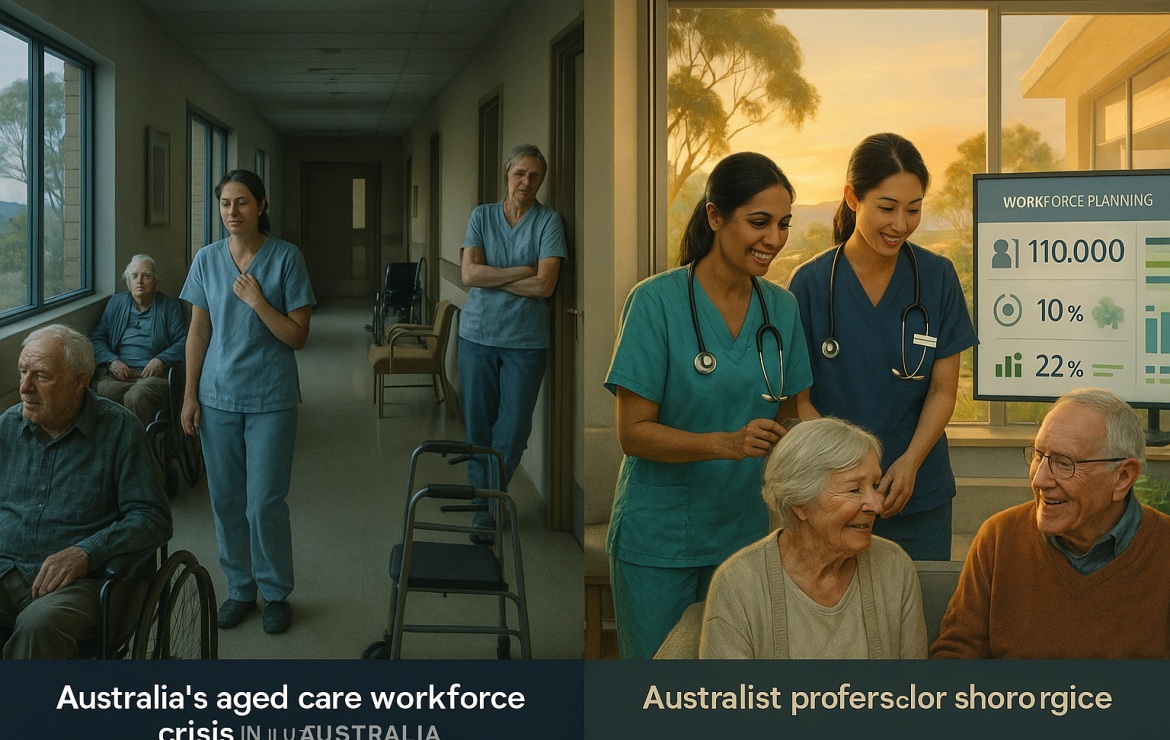
Australia’s Aged Care Workforce Crisis: Why Employer‑Sponsored Registered Nurses Are the Fastest Path to Regional Stability
Introduction
Australia is entering a critical turning point in aged care. As the population ages faster than the workforce can support it, families, residents, and care providers are already feeling the strain. In regional areas, the crisis is even more visible—facilities are struggling to maintain safe staffing levels, waitlists are growing, and overstretched nurses are reaching breaking point.
The shortage of aged care workers—particularly Registered Nurses (RNs)—has become one of Australia’s most urgent social challenges. Demand for complex clinical care is rising sharply, yet the workforce has not kept pace. The result is a widening gap between what older Australians need and what the system can safely deliver.
Employer‑sponsored Registered Nurses, including the ready‑to‑deploy cohort represented by Brightstar Nursing Australia PTY LTD, are emerging as one of the most immediate, effective, and scalable solutions to fill regional aged care workforce gaps and stabilise service delivery.
Background and Context
Historical Context
The 2021 Aged Care Royal Commission exposed systemic neglect, chronic understaffing, and unsafe workloads as central causes of declining care quality. Despite reforms—including wage increases and mandated care minutes—the sector continues to face a widening workforce deficit. These measures improved conditions but were not sufficient to retain or attract enough workers to reverse long‑term shortages.
Current Relevance
By 2026, workforce shortages have deepened even further. An ageing population, more complex health needs, and a wave of retirements among existing staff are accelerating demand. Regional Australia faces the harshest impact due to geographic isolation, limited training pipelines, reduced access to clinical placements, and historically low retention rates.
Main Body
Key Concepts
Workforce Shortage Defined
Aged care relies on both direct‑care workers (personal care workers, lifestyle officers, allied health assistants) and clinical professionals such as RNs. Unlike acute hospital nursing, aged care RNs manage chronic and complex conditions, medication management, wound care, behavioural support, clinical governance, and escalation decisions. The shortage applies across all categories, but RN gaps create the highest risk.
Employer Sponsorship
Employer‑sponsored migration allows approved providers to sponsor qualified international RNs to work in Australia. For regional communities—where attracting domestic nurses is extremely difficult—sponsor‑supported cohorts such as Brightstar’s are essential to creating a stable, long‑term workforce.
Why Regional Workforce Support Matters
Staff shortages are disproportionately severe in rural settings. Reduced access to health services means aged care facilities often serve as de facto community healthcare hubs. When these services lack nurses, entire regions feel the consequences—through higher hospital transfers, poorer chronic disease management, and reduced quality of life for older residents.
Latest Statistics and Data
Current Workforce Size
As of 2023–2026, Australia employs approximately 456,000–500,000 paid aged care workers, supported by around 79,000 volunteers.
Shortage Projections
- Direct‑care shortages are expected to reach 110,000 by around 2036 and 400,000 by 2050.
- RN shortfalls are forecast at 79,473 by 2035, including 17,551 full‑time‑equivalent positions in aged care.
Demand Growth
- Residential aged care beds are expected to double from 200,000 to 410,000 by 2044.
- Home care packages will expand from 1.13 million to 1.82 million in the same period.
Demographic Data
- One in five Australians will be over 65 by 2031.
- 51% of residential aged care employees are overseas‑born, and one in six personal care workers is on a temporary visa.
Workforce Overview Table
| Category | Current Numbers | 2031–2050 Projections | Source |
|---|---|---|---|
| Paid Workforce | 456k–500k | N/A | Healthcare Australia 2026 Workforce Trends |
| Direct‑Care Shortage | N/A | 110k by 2036; 400k by 2050 | CEDA Report on Aged Care Worker Shortage |
| RN Shortage | N/A | 79,473 by 2035 | Caring for an Ageing Australia Report |
| Residential Beds | 200k | 410k by 2044 | Ageing Australia Workforce Strategy |
| Home Care Packages | 1.13m | 1.82m by 2044 | Ageing Australia Workforce Strategy |
Expert Opinions
Jarrod Ball (CEDA)
“We will need at least 17,000 new direct‑care workers every year for the next decade. The shortage lies at the heart of the sector’s problems.”
Cassandra Winzar (CEDA)
A minimum of 200 minutes of care per resident each day is essential, but current staffing levels cannot consistently meet this baseline.
National Skills Commission
Projected a combined care workforce gap of 211,430 FTE by 2050—reflecting aged, disability, and mental health sectors.
Case Study: Aged Care Provider Workforce Survey 2026
The 2026 Aged Care Provider Workforce Survey, closing in March and reporting in 2027, aims to map real‑time workforce characteristics across residential and home care. Early participation highlights persistent RN gaps, especially in regional services. Sponsored RN programs, such as those run by Brightstar Nursing, can help bridge the data‑identified shortage zones.
Current Trends and Future Projections
Rising RN Demand
Increased chronic disease, dementia, and complex care needs demand more clinically skilled RNs capable of providing leadership and ensuring compliance.
Specialisation
A growing share of aged care RNs are required to specialise in dementia care, allied health support, palliative care, and complex wound care. Around 25,000 additional specialised staff will be needed by 2033.
Migration Reliance
Australia increasingly depends on temporary visa holders and sponsored workers to maintain staffing ratios—especially in remote regions.
Future Outlook
Despite a stable job market, shortages are predicted to intensify into the 2030s, with employer‑sponsored programs filling urgent gaps.
Impact Analysis
Societal Impact
Understaffing contributes to increased burnout, reduced care quality, longer wait times for home care, and more avoidable hospital admissions.
Industry Impact
Facilities risk breaching minimum care minutes, facing regulatory penalties, and even closing services—particularly in regional towns.
Regional Impact
The absence of RNs has more severe consequences outside metropolitan areas. Brightstar’s nurse cohort provides immediate workforce relief, enabling continuity of services.
Comparison to Alternatives
Workforce Strategy Comparison Table
| Strategy | Pros | Cons | Regional Suitability |
|---|---|---|---|
| Local Training | Builds local workforce | Slow to deliver qualified RNs | Low |
| Direct Migration | Lower cost for individuals | Harder for regional matching and settlement | Medium |
| Inter‑Sector Poaching | Brings experienced staff | Creates shortages elsewhere | Low |
| Employer Sponsorship (e.g., Brightstar) | Fast, targeted, regional‑ready | Requires employer oversight | High |
Brightstar’s model offers the fastest route to place qualified RNs in regional Australia.
Controversies and Debates
Casualisation vs Permanency
Casual roles increase burnout and turnover; permanency provides stability but is harder for budget‑stretched providers.
Reliance on Migration
Some argue reliance on sponsored workers isn’t sustainable. Others see it as an essential strategy while domestic training pipelines catch up.
Funding Gaps
The 2025 Senate review found that while reforms helped, funding remains insufficient to support mandated staffing levels long‑term.
How-To: Hiring and Retaining International RNs Successfully
Step 1: Audit Workplace Culture
Identify common burnout drivers, including workload, leadership gaps, or lack of professional development.
Step 2: Create a Regional Lifestyle Onboarding Plan
Support international nurses with housing options, community introductions, transportation guidance, and local cultural insights.
Step 3: Implement Peer Mentorship
Pair each sponsored RN with a senior nurse who supports clinical transition and cultural adjustment.
Step 4: Provide Tailored Upskilling
Offer training in dementia behaviour management, wound care, telehealth coordination, and regulatory compliance.
Tips and Best Practices
- Use relocation grants strategically (e.g., rent subsidies, travel assistance).
- Offer career progression that highlights aged care specialisations.
Common Mistakes to Avoid
- Assigning high‑complexity caseloads too soon.
- Failing to connect nurses with community groups.
Variations / Alternative Approaches
Facilities can partner with universities to create tailored clinical placements or use micro‑credentials for rapid upskilling.
Frequently Asked Questions
How can regional providers improve RN retention?
Community integration, housing support, and clear career pathways significantly improve retention rates.
What cultural adaptation programs work best for sponsored nurses?
Peer buddy systems and structured orientation programs have the strongest evidence for improving long‑term outcomes.
How do sponsored RNs improve care quality?
Sponsored RNs reduce medication errors, strengthen clinical governance, and introduce new specialisations.
Why do regional facilities struggle more than metropolitan ones?
Smaller talent pools, fewer incentives, and limited training resources all contribute to lower staffing levels.
What future aged care roles are emerging?
Telehealth coordinators, dementia behaviour consultants, and chronic disease specialists will be in demand.
Challenges and Solutions
Challenges
- Limited regional housing
- Burnout due to complex caseloads
- Funding limits for sponsorship programs
Solutions
- Employer‑assisted accommodation
- Rotating rosters with protected downtime
- Using 2026 workforce data to advocate for better funding models
Ethical Considerations and Best Practices
- Ensure transparent recruitment free from exploitation
- Maintain dignity in care despite shortages
- Provide fair pay, safe workloads, and culturally respectful inclusion initiatives
Success Stories
The 2024 Worker Survey (published 2025) showed increased satisfaction following wage reforms and better support initiatives. Anecdotal reports from regional providers describe improved continuity of care and reduced RN turnover when using sponsorship programs.
Tools and Resources
- Telehealth systems for remote clinical reviews
- AI‑enabled resident monitoring
- Workforce forecasting dashboards to plan staffing needs
Conclusion
Recap
Australia is facing an unprecedented aged care workforce crisis. Demand is exploding, and regional communities are suffering the most. Despite years of reforms, shortages continue to grow.
Final Thoughts
Employer‑sponsored RNs—particularly ready‑to‑deploy cohorts like those from Brightstar Nursing Australia—offer an immediate, practical, and scalable solution to stabilising aged care in regional Australia while long‑term reforms catch up.
Additional Resources
Related posts