
Healthcare Recruitment Revolution: AI & Gig Pools for 2026

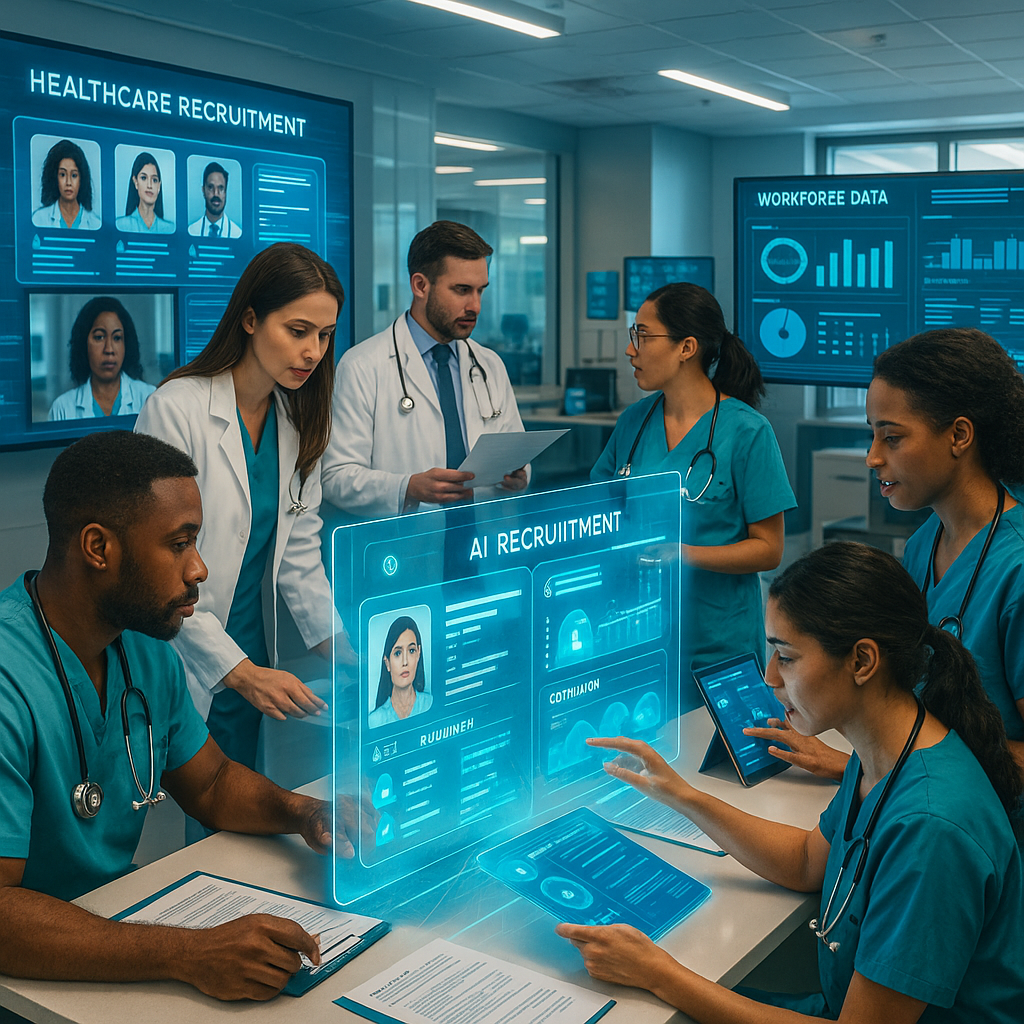
Specialist Healthcare Recruitment in 2026: Faster, Smarter, and Built for a Redefined Workforce
1. Introduction
1.1 Hook
As 2026 approaches, healthcare staffing pressure is accelerating at a pace the industry has never seen before. Workforce shortages are widening across nearly every clinical specialty, patient demand is escalating with the aging population, and a rapid wave of AI‑enabled technologies is reshaping how clinicians are found, hired, scheduled, and retained. The result is a pivotal moment for specialist healthcare recruitment—one where speed, accuracy, and dependability will determine organizational survival.
1.2 Brief Overview
Today’s specialist healthcare recruitment landscape is changing faster than at any time in the past two decades. Historic shortages, rising acuity, and persistent operational strain are converging with transformative tools such as predictive analytics, automated screening, and intelligent scheduling platforms. At the same time, employers are redesigning staffing models—from internal gig pools to multi‑state telehealth roles—to stabilize costs and ensure continuity of care.
1.3 Thesis Statement
Specialist healthcare recruitment is on the brink of its next major evolution. Organizations that adopt faster, smarter, and more dependable recruitment and workforce‑deployment strategies will be best positioned to meet 2026’s sharp demand curve and heightened regulatory expectations.
Transition: These shifts may feel sudden, but their roots extend deep into long‑standing structural challenges.
2. Background and Context
2.1 Historical Context
Modern healthcare staffing challenges began long before the recent spike in demand. The 1997 Medicare residency cap restricted physician pipeline growth for nearly three decades, even as the U.S. population grew larger and older. A steadily aging clinician workforce compounded these supply constraints, edging many hospitals toward gradual—but predictable—shortages.
COVID‑19 then magnified longstanding issues. Systems leaned heavily on travel nursing, locum tenens clinicians, and temporary staff, setting new cost baselines that remain difficult to unwind. Despite rising demand, the U.S. underinvested in training capacity for nurses, physicians, and allied health workers, leaving gaps that today’s recruitment leaders must solve creatively.
2.2 Current Relevance
In 2025–2026, these historic constraints have turned urgent:
- Persistent shortages stretch across physicians, NPs/PAs, behavioral health, and home‑care teams.
- Staffing models are being redesigned around cross‑training, alternative career pathways, mobile clinician pools, and expanded remote-care roles.
- Wage inflation, new regulations, and geographical supply imbalances continue to apply financial and operational strain.
Transition: With this context, the forces that are reshaping specialist healthcare recruitment today come sharply into focus.
3. Main Body
3.1 Key Concepts Shaping 2026 Recruitment
A few dominant forces are driving the next era of healthcare staffing:
- Escalating Workforce Shortages
Shortfalls are expected across physicians, advanced practice providers, home‑care workers, CNAs, and allied health professionals. These shortages are uneven but persistent, driving competition among health systems. - AI and Predictive Analytics Adoption
AI-powered sourcing, automated screening, and predictive scheduling tools are rapidly becoming central to recruitment operations. Organizations are using forecasting to anticipate shortages before they materialize. - Growth of Internal Flexible Pools
Hospitals are investing in internal gig pools and flexible staffing resources to reduce dependence on high‑cost external agencies, a trend strongly reinforced by 2025 market data. - Demand for Faster, Dependable Recruitment
With staffing costs linked to financial performance and care quality, systems now prioritize speed, reliability, and accuracy in hiring more than ever.
3.2 Latest Statistics
Key Industry Metrics for 2025–2026
| Metric | Value | Source |
|---|---|---|
| Physician shortage projection | 85,000–86,000 by 2036 | LocumTenens.com 2025-2026 forecast |
| New healthcare job openings (2023–2033) | >2 million | BLS, 2025 analysis |
| States with RN surpluses | 73% | Mercer snapshot, Aug 2025 |
| Travel nursing volumes | Down 17% YoY | Aug 2025 |
| Organizations planning to expand AI recruiting by 2026 | 61% | Mercer 2025 |
Transition: These numbers highlight the scale of shifts underway, setting the stage for expert interpretations.
3.3 Expert Opinions
American Hospital Association (AHA)
“Hospitals are strategically rebuilding care teams, modernizing workflows and expanding roles.” (Dec 9, 2025)
QX Global Group
“AI and machine learning will improve efficiency in sourcing, screening, and candidate matching.” (2025)
Syncx
Internal flexible staffing will be a decisive force in 2026 workforce strategy (2025/2026 outlook)
DefinitiveHC
Locum tenens demand is expected to rise as physician shortages deepen (Aug 2025)
LocumTenens.com
Managed services adoption will accelerate into 2026, improving compliance and cost control (2025→2026 forecast)
3.4 Case Study: Internal Gig Pool Transformation
A mid‑sized U.S. health system implemented an internal gig pool supported by real‑time staffing software and AI scheduling tools (AHA, Dec 2025). Within months:
- External agency spend dropped roughly 20%.
- Shift fill reliability improved across high‑acuity units.
- Clinicians gained access to flexible, predictable scheduling pathways.
This case shows how workforce reinvention can deliver immediate operational and financial gains.
3.5 Current Trends and Future Projections
Key developments shaping the near future include:
- Expansion of AI-assisted sourcing, automated screening, and predictive analytics.
- Growth in internal gig pools, complemented by MSP/VMS platforms for contingent workforce management.
- Telehealth and multi‑state licensure expanding recruitment geographies.
- Scope expansion for APRNs/PAs supporting team‑based care amid physician shortages.
- Recruitment shifting from reactive hiring to proactive pipelines and employer branding.
3.6 Impact Analysis
For Patients:
Access may improve in underserved regions due to telehealth and expanded APRN/PA roles, but high turnover still threatens continuity of care.
For Providers:
Health systems face financial strain from contract labor but can stabilize costs through flexible staffing and predictive scheduling.
For the Workforce:
Workers are encountering new job models—remote roles, gig-style options, and digital workflows requiring AI literacy.
3.7 Comparison of Recruitment Approaches
| Approach | Strengths | Weaknesses |
|---|---|---|
| Traditional agency/travel staffing | Rapid crisis response; robust credentialing | High cost; dependency risk; inconsistent continuity |
| Internal gig pools | Lower agency spend; better continuity; organizational control | Upfront investment and culture change |
| AI-enabled pipelined recruiting | Faster sourcing; predictive matching; scalable engagement | Requires governance; risk of bias |
3.8 Controversies and Debates
Several debates dominate 2026 workforce discussions:
- AI Bias and Governance: Efficiency gains vs. fairness and transparency.
- Agency Staffing vs. Internal Models: Long-term sustainability and cost structure.
- Scope-of-Practice Expansion: Balancing expanded roles with regulatory and professional expectations.
Transition: With these challenges in mind, leaders must prepare practically for 2026.
4. How To: Preparing Recruitment Operations for 2026
4.1 Step‑by‑Step Instructions
- Redesign interview workflows with 24‑hour turnaround goals.
- Build specialty-specific micro-pipelines targeting high‑shortage areas.
- Establish cross‑departmental “talent councils” linking HR, clinical leadership, and operations.
4.2 Tips and Best Practices
- Use behavioral and performance analytics to enhance role‑fit predictions.
- Consolidate job descriptions to remove unnecessary credential requirements.
- Create incentive programs for internal transfers to boost retention.
4.3 Common Mistakes to Avoid
- Over‑automating communication, which risks candidate disengagement.
- Neglecting integration of licensure/credentialing systems.
- Treating telehealth as separate from overall recruitment strategy.
4.4 Variations and Alternatives
- Rural systems: Telehealth-first recruitment.
- Large systems: Centralized talent command centers.
- Small hospitals: Shared regional pools with standardized credentialing.
5. FAQ Section
5.1 How will recruitment roles change by 2026?
Recruiters will function as talent strategists managing AI tools, pipelines, and internal mobility programs rather than simply posting jobs and screening resumes.
5.2 Can small hospitals adopt predictive analytics?
Yes. Cloud-based tools now offer prebuilt models requiring no in‑house data science.
5.3 Which specialties will be hardest to recruit?
Behavioral health, home health aides, and primary care NPs/PAs due to structural demand‑supply imbalance.
5.4 How does multi‑state licensure affect hiring?
Automated compact monitoring and licensure tracking are becoming essential to match candidates to roles quickly and accurately.
5.5 What KPIs matter most?
Pipeline velocity, internal mobility rates, fill‑rate reliability, and hiring diversity.
6. Challenges and Solutions
6.1 Challenge: Fragmented Tech Systems
Solution: Integrate recruiting, credentialing, and scheduling systems via APIs.
6.2 Challenge: Workforce Burnout
Solution: Implement flexible shift models and redesign roles to reduce administrative burden.
6.3 Challenge: Regional Shortages
Solution: Use national telehealth recruitment and expanded multi‑state credentialing.
7. Ethical Considerations and Best Practices
- Conduct transparent AI fairness audits.
- Communicate clearly about expanded scopes of practice.
- Ensure HIPAA-compliant integration between recruitment systems and clinical data platforms.
8. Success Stories or Testimonials
- Systems highlighted by the AHA in December 2025 achieved 20%+ reductions in agency spend using internal pools and AI scheduling.
- LocumTenens.com reports improved compliance and operational efficiency through MSP adoption heading into 2026.
9. Tools, Equipment, or Resources
- AI recruiting platforms with matching algorithms and bias‑audit tools.
- Predictive staffing analytics integrated with EHR workflows.
- Telehealth platforms with built‑in licensure tracking.
- Vendor management systems for contingent workforce oversight.
10. Conclusion
10.1 Recap
Specialist healthcare recruitment is undergoing a fast, transformative shift powered by AI, predictive insights, flexible staffing models, and redesigned talent strategies. Persistent shortages and rising acuity make these changes essential—not optional.
10.2 Final Thought
Organizations that move now—embracing speed, intelligence, and dependable tech‑plus‑people strategies—will define the next era of healthcare staffing and be best equipped to meet the demands of 2026 and beyond.
11. Additional Resources
Related posts