IWD 2026 Australia: Balance the Scales Theme & Progress

International Women’s Day 2026 in Australia: Balancing the Scales for Real Gender Equality
Introduction
Hook
Across Australia, the lead‑up to International Women’s Day (IWD) 2026 is charged with national momentum. Communities, workplaces, and governments are leaning into this year’s theme, “Balance the Scales,” as a rallying call for transformative gender justice. Unlike previous years that centred economic empowerment or representation, IWD 2026 places the justice system—and its still‑uneven treatment of women—under the spotlight.
Brief overview
Celebrated globally on 8 March, International Women’s Day marks over a century of struggle and progress for gender equality. In Australia, IWD 2026 resonates deeply because the national theme mirrors global concerns while acknowledging the country’s unique challenges. For the world, “Balance the Scales” highlights the stark legal inequities women continue to face—UN Women reports that women hold only 64% of the legal rights afforded to men. In Australia, the theme carries a dual meaning: a call to not only recognize progress but also confront persistent injustice.
Thesis statement
Australia’s observance of IWD 2026 reflects a pivotal intersection between measurable progress and entrenched structural inequality. As the country celebrates near-equal parliamentary representation and improvements in global gender rankings, it must also reckon with the deep systemic barriers that remain—particularly for marginalized women. This moment creates a crucial opportunity for reflection, action, and long‑term reform.
Background and Context
Historical evolution of International Women’s Day
International Women’s Day traces its lineage to early 20th‑century labour and suffrage movements in North America and Europe. What began as marches demanding fair pay, voting rights, and humane working conditions gradually evolved into a global platform advocating for gender justice, economic empowerment, and social reform. Today, IWD is supported by the UN and recognized worldwide as a key moment for confronting inequality and celebrating achievements.
Why IWD matters to Australia in 2026
Gender equality has never been more visible—or more complex—in Australia.
- Women’s political representation has risen sharply, reaching 49.6% of the federal Parliament.
- Workforce participation has hit a historic yearly average of 63.1% (2025), reflecting increasing engagement in both professional and leadership roles.
- Yet research continues to show persistent systemic gaps: wage inequality, unpaid care burdens, and disproportionate exposure to gender‑based violence.
- UN Women Australia has emphasized justice reform as the defining challenge of the decade, highlighting failures of systems meant to protect women.
Transition
This background lays the groundwork for understanding the current moment: one defined by intertwined progress and structural inequity.
Main Body
Key concepts shaping IWD 2026
The theme “Balance the Scales” centres on the urgent need for justice-based reform. Globally, UN Women warns that women lack 36% of men’s legal rights, leaving them vulnerable across every stage of life.
Three interconnected concepts anchor the conversation:
- Justice‑Focused Equality
The focus shifts from symbolic parity to substantive legal and systemic fairness. - Intersectional Gender Equality
Gender inequality compounds with race, disability, age, sexuality, and migration status—requiring nuanced responses. - Inclusive Feminist Advocacy
IWD 2026 explicitly includes trans women and gender‑diverse people, acknowledging that gender inequality is not experienced uniformly.
Latest statistics
Gender Equality Snapshot (Australia & Global)
| Indicator | Statistic | Source |
|---|---|---|
| Women’s workforce participation (2025) | 63.1% | Status of Women Report Card |
| Women in federal Parliament | 49.6% | Parliamentary Library |
| Global violence prevalence | 1 in 3 women | UN Women Australia |
| Global legal rights held by women | 64% of men’s rights | UN Women |
| Australia’s global gender ranking (2026) | 13th (up from 43rd) | Regional Media |
These numbers reflect significant advancement, yet also deep structural urgency—especially concerning violence and legal protection.
Expert commentary
Experts across sectors echo the need for justice‑focused reform:
Simone Clarke (UN Women Australia) stresses the need to “transform our justice systems” and elevate marginalized voices.
The NGO Training Centre stresses that “gender does not disappear with age,” calling for improved inclusion in disability and aged care systems.
Case studies / real‑world developments
1. Parliamentary Representation
Australia’s near‑equal Parliament (49.6% women) represents a historic milestone, demonstrating tangible political progress.
2. Disability and Aged Care Reform
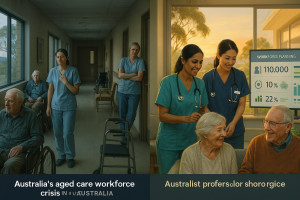
Recent inquiries into disability and aged care highlight persistent accountability gaps. Trauma‑informed and person‑centred approaches are increasingly required, not suggested.
3. Research Leadership
The Australian Research Council (ARC) has centred equity in research funding and leadership, signalling a national push toward inclusive academic innovation.
Emerging trends and future outlook
Several patterns are shaping Australia’s equality trajectory:
- A clear pivot from economic empowerment alone to justice‑centered transformation.
- Growing normalization of intersectional frameworks.
- Stronger alignment with global themes such as UN Women’s “Give to Gain,” which reframes equality as a universal benefit.
Impact analysis
Societal Impact
Greater awareness of marginalized women’s experiences and increased public discourse on justice reform.
Industry Impact
Heightened accountability in justice, disability, aged care, research, and corporate systems.
Economic Impact
Potential long‑term productivity gains if gender‑responsive policies are implemented—supported by economic modelling.
Comparisons with alternative frameworks
- “Give to Gain” emphasizes mutual benefit while “Balance the Scales” stresses justice.
- Economic‑centric approaches often fail to address violence, legal inequity, and marginalization.
- Intersectional frameworks offer deeper analysis than single‑axis gender models.
Controversies and debates
Australia’s IWD landscape includes contested terrain:
- Debates on trans inclusion vs. exclusionary feminist claims.
- Tension between economic and justice priorities.
- Concerns that Australia’s improved global ranking may mask deeper inequality.
How to Meaningfully Engage With IWD 2026 in Australia
Step‑by‑step actions
- Set year‑long gender equality goals and publish progress dashboards.
- Partner with local women’s organizations to identify unmet community needs.
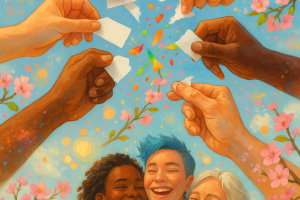
- Create cross‑generational dialogue sessions connecting youth with elders.
Tips and best practices
- Conduct intersectional impact assessments before launching initiatives.
- Use storytelling platforms to amplify under‑represented voices, including migrant, older, and remote‑community women.
Common mistakes to avoid
- Prioritizing white‑collar workplaces while neglecting care and regional sectors.
- Treating IWD as a marketing event rather than a catalyst for structural change.
Variations and alternative approaches
- Community forums addressing local issues.
- School programs exploring justice and rights.
- Workplace equity innovation labs.
FAQ
1. How can small businesses participate without major budgets?
They can partner locally, trial flexible work arrangements, or host community learning sessions.
2. How does IWD intersect with First Nations justice movements?
Both advance rights‑based agendas addressing systemic inequality, though each reflects unique cultural contexts requiring culturally informed approaches.
3. How can men engage constructively?
By practicing informed allyship, advocating for equity, and using their influence to challenge inequitable norms.
4. Why is justice reform a top priority in 2026?
Because globally, women still hold only 64% of legal rights afforded to men, and justice systems often fail violence survivors.
5. How can schools and universities sustain engagement beyond 8 March?
Through curriculum modules, student‑led initiatives, and equality‑focused research partnerships.
Challenges and Solutions
Inaccessible justice system
Solution: legal literacy programs, funding for women’s legal services, and court process reform.
Unpaid care burden
Solution: shared‑care policies and flexible work reform.
Intersectional erasure
Solution: improved data collection and sector‑specific inclusion standards.
Movement fragmentation
Solution: fostering solidarity and explicitly including trans and gender‑diverse voices.
Workplace inequities
Solution: equity audits and transparent pay structures.
Ethical Considerations and Best Practices
Authenticity vs. tokenism
Recognize IWD through sustained commitments, not one‑day events.
Non‑erasure of marginalized women
Use inclusive language and design programs that account for differing life experiences.
Rights‑based framing
Avoid charity models; focus on justice, autonomy, and structural reform.
Accountability and transparency
Commit to publishing annual gender equity reports.
Success Stories
- Parliamentary representation: 49.6% women in federal Parliament.
- Aged and disability care reforms featuring trauma‑informed, rights‑based practice.
- ARC leadership reforms centring equity in research.
Tools and Resources
- Gender‑equity audit templates.
- Intersectional policy assessment frameworks.
- UN Women Australia toolkits.
- Legal rights guides for women.
Conclusion
Recap
IWD 2026 represents a moment of profound reckoning and opportunity for Australia. The country has made significant strides in political representation, workforce engagement, and global gender equality rankings. Yet systemic inequalities—violence, legal inequity, unpaid care, and intersectional exclusion—continue to hold women back.
Final thoughts
Balancing the scales requires more than celebration; it demands justice, inclusion, and sustained action.
Call to action
As Australia observes IWD 2026, individuals, institutions, and communities are urged to transform insight into action—beyond slogans, beyond one day, and into a year‑round commitment to real gender equality.
Additional Resources
Related posts